Research interests - SNF Prof. Dr. Joana Graca Marques
Epigenetic plasticity cancer
The question
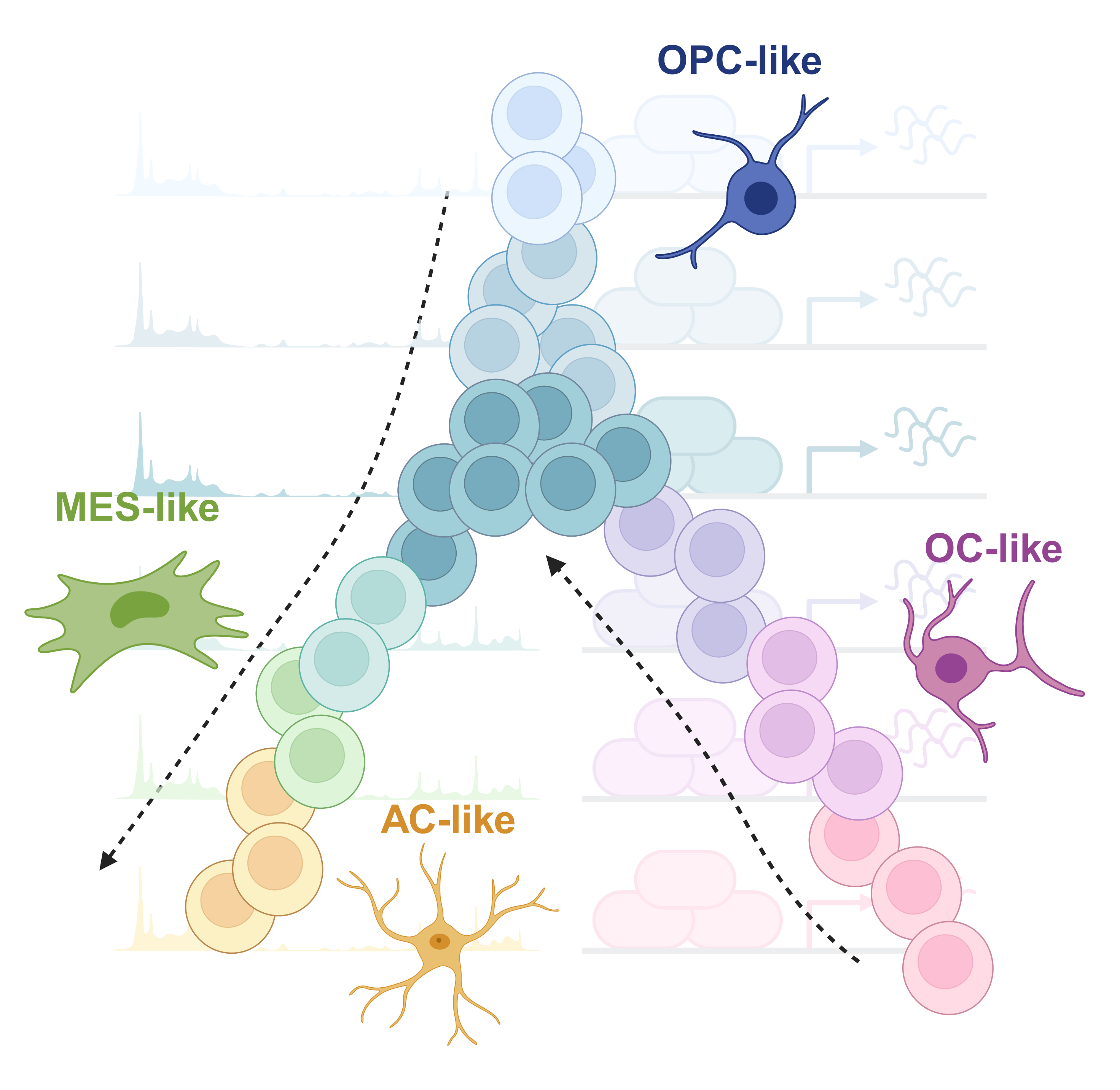
Cells, within an individual organism, exhibit different functions and phenotypes, despite being genetically nearly identical. In the Waddington landscape model, cellular differentiation is depicted as a unidirectional process in which “walls” are consecutively risen to guide cell fate. Epigenetic regulatory constraints greatly contribute to these “walls” and enable cell type specification.
Similarly, cancer cells, within an individual tumor, present distinct molecular phenotypes or cell states. These cell states are plastic, meaning that cancer cells can transition between them to adapt to their environment and evade therapy. Interestingly, cancer cell states often resemble distorted versions of developmental hierarchies where both stem-like and differentiated-like cancer cells are present. In parallel with normal development, epigenetic (de)regulation plays a pivotal role in cancer cell state specification. Due to the reversible nature of the epigenome, pharmacologically guided epigenetic reprogramming holds great promise for cancer therapy.
In our lab, we aim to understand:
- What epigenetic networks promote stemness and differentiation in cancer?
- Whether inherent cancer cell plasticity prevents terminal differentiation?
- How can we restrict and/or manipulate epigenetic plasticity for therapeutic benefit?
The model
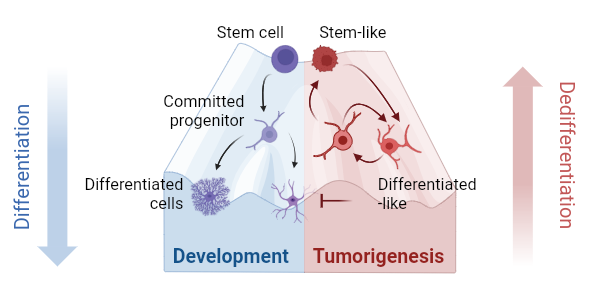
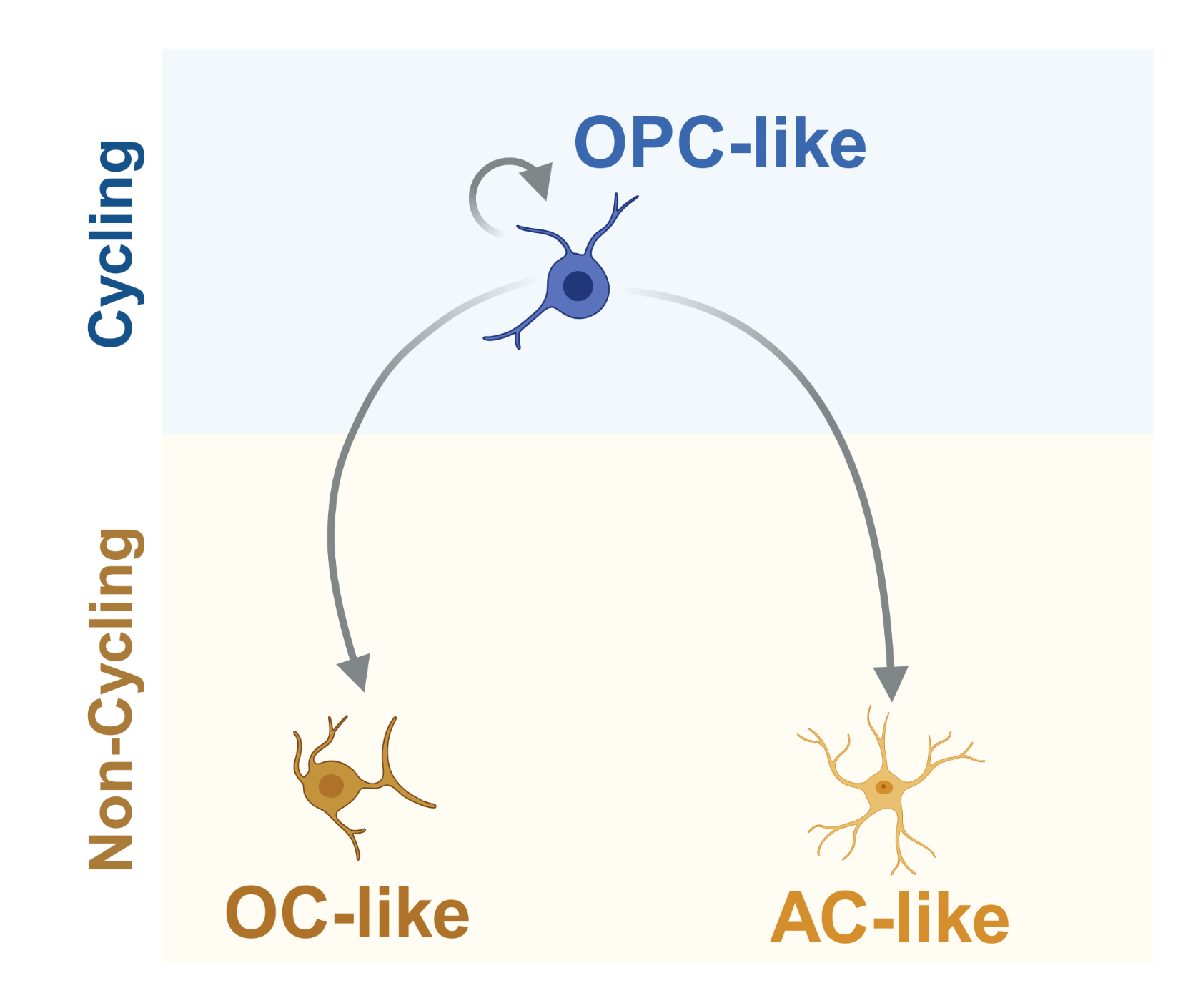
Diffuse midline glioma (DMG) is an aggressive pediatric brain tumor with no effective therapies. Single-cell transcriptomic analyses have revealed that DMG tumors are comprised of heterogeneous cell populations. Some DMG cells are highly proliferative, exhibit stem-like features, and partially resemble oligodendrocyte precursor cells (OPC-like); while others are non-cycling and more similar to differentiated glia, displaying an astrocyte-like (AC-like) or oligodendrocyte-like (OC-like) phenotype.
DMG cellular heterogeneity is tightly linked to epigenetic deregulation. Indeed, this glioma is often driven by a heterozygous H3K27M mutation that markedly alters the cell’s epigenome and blocks differentiation. Thus, restoration of the epigenetic landscape in DMG cells represents a promising strategy to reprogram glioma cells towards more differentiated-like and non-cycling cell states.
Using emerging single cell methods combined with models that faithfully recapitulate cellular heterogeneity in DMG, we aim to comprehensively characterize the tumor-specific epigenetic regulatory circuits that enable cell state transitions in DMG and guide the design of innovative therapies.
The methods
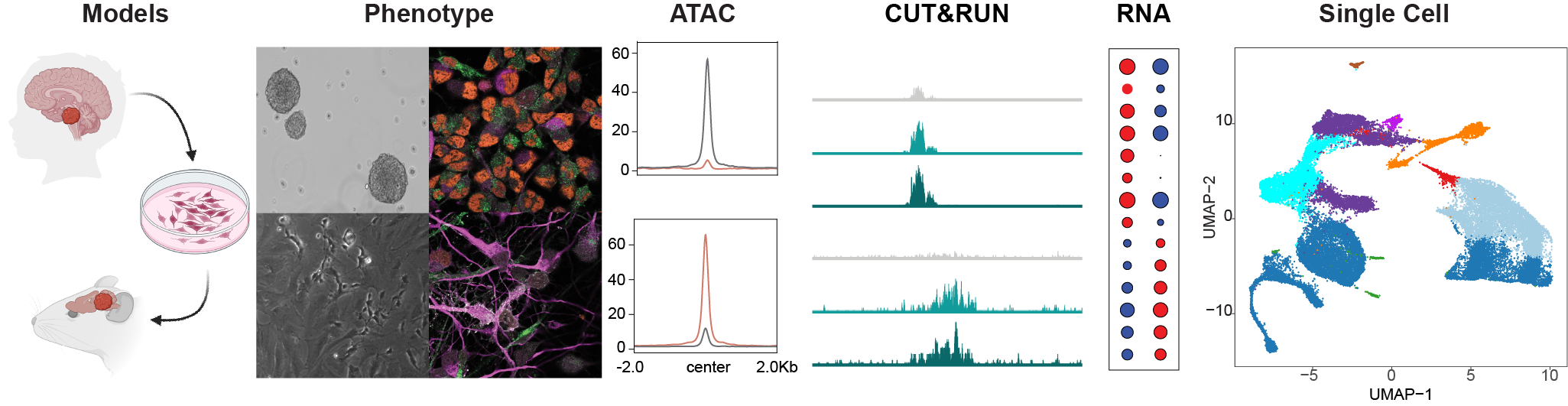
Our lab uses state-of-art cellular, molecular, and computational biology techniques to interrogate the epigenome and transcriptome of cancer cells. Classical bulk and innovative single cell methods are employed alongside genetic and pharmacological perturbations to provide causality to generated hypothesis. We use both in vitro and in vivo patient derived models as well as patient samples.
Open positions
Postdoctoral researchers
We strongly encourage postdoctoral candidates who are interested in epigenetic regulation in cancer and motivated to apply for competitive funding to contact us (joana.gracamarques@dmmd.uzh.ch). Please send your CV, list of publications, and research interests/project proposals.
PhD students
We recruit PhD students through both Cancer Biology and the Molecular Life Sciences PhD Programs of the Life Science Zurich Graduate School (LSZGS). The LSZGS website has all the information on how to apply.
Masters and Bachelors students
Students from UZH and ETH are welcome to join us for a research project in cancer epigenetics. Please contact us directly:
joana.gracamarques@dmmd.uzh.ch